


NEWARK, NJ —
August 31, 2026 |
By DailyHudson Staff
The film facility coming to the South Ward will run on solar and create 600 jobs, most for Newark residents.
The first thing visitors will notice at the new Lionsgate film studio rising on the old Seth Boyden housing site won’t be the soundstages or the catering trucks. It’ll be the roof.
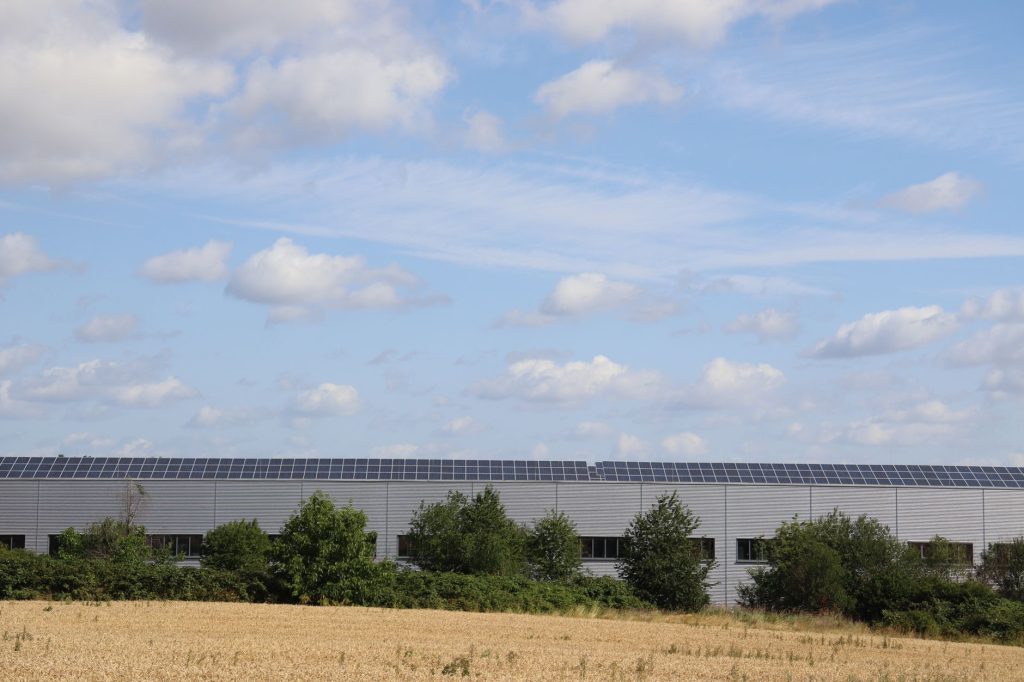
From above, the 12-acre campus in Newark’s South Ward will be covered in solar panels — enough to generate 1.34 million kilowatt-hours a year. That’s roughly the same amount of electricity it takes to power 120 average New Jersey homes annually.
This isn’t an afterthought or a marketing gimmick. The $194 million studio project just landed $101 million in financing specifically to make it one of the greenest film production facilities on the East Coast — and it’s all tied to a state program that most residents have never heard of.
What’s happening
The New Jersey Economic Development Authority (EDA) and Nuveen, a global asset manager, finalized the loan through the Garden State Commercial Property Assessed Clean Energy (C-PACE) program. The money will go toward energy-saving features like the rooftop solar array, seven electric vehicle charging stations, high-efficiency lighting, HVAC systems, and water conservation measures expected to save 259,000 gallons a year.
Garden State C-PACE works differently from a traditional loan. Property owners borrow money from a private lender like Nuveen Green Capital, then repay it as a special assessment on their property tax bill. The municipality collects the payment and sends it to the lender. Because it’s tied to the property, the loan stays with the building if it changes hands — which makes lenders willing to offer longer terms and lower rates.
How we got here
Lionsgate and Great Point Studios broke ground on this site in December 2024, partnering with the New Jersey Performing Arts Center and the Newark Housing Authority. For decades, the Seth Boyden complex stood as public housing that fell into disrepair. Now, the land is becoming a hub for film production that city officials hope will anchor Newark’s creative economy.
The studio is expected to create more than 600 long-term production jobs, with roughly 70% of full-time positions reserved for Newark residents. Beyond the jobs, the EDA estimates the studio will generate an annual economic impact exceeding $800 million — money that could ripple through local restaurants, hotels, and supply shops.
State officials sweetened the deal for Lionsgate by designating it as New Jersey’s first “studio partner” under a program that expanded film and digital media tax credits. Lionsgate committed to staying for at least 10 years and can now take a 40% base tax credit on production expenses, plus wage subsidies of up to $60 million depending on project spending.
What it means for Hudson County
Newark isn’t Hudson County, but for locals who cross the river for work — and for anyone who watches movies or shoots video — this matters. The film industry already has a foothold in Jersey City and Hoboken, with production companies regularly scouting locations. A studio of this scale in Newark could bring more Hollywood-style productions to the region, which means more work for local crew members, drivers, makeup artists, and set builders.
There’s also a practical environmental angle. New Jersey is pushing toward 100% clean energy by 2035, and projects like this show how large facilities can reduce their carbon footprint without sacrificing jobs. But the C-PACE program isn’t just for big studios — it’s available to any commercial property owner in the state looking to upgrade their buildings with solar panels, efficient boilers, or better insulation.
What people are saying
EDA officials framed the loan as a win-win. “This project demonstrates how clean energy investments can align with economic development to create good jobs and build a more sustainable future,” the agency said in a press release. Nuveen, which has committed over $3 billion to C-PACE lending since 2023, views the program as a reliable asset class that also produces environmental benefits.
The Newark Housing Authority, which owns the land, has emphasized the partnership’s promise to include local residents. The EDA also granted $750,000 earlier this year toward a workforce development initiative that will train Newark residents in film and digital media skills, aiming to ensure the jobs don’t go to outsiders.
What comes next
Construction is underway, and the studio is expected to open with multiple soundstages, production offices, and full on-site services like equipment storage, props, parking, and catering. Residents who want to stay involved can attend local planning board meetings or track the project through the Newark Housing Authority’s website.
For those thinking about their own energy bills, the C-PACE program is active now and accepting applications. A quick search for “Garden State C-PACE” leads to the EDA’s page with details on eligibility and how to apply.
The solar panels will go up one by one. The jobs will follow. And Newark — a city that’s been waiting for a comeback like this — will have a place where stories get made, powered by the sun.
Source: Jersey Digs